

Authorship and provenance
Enoch separates software/system authorship, operational release responsibility, and generated research text and claims. The maintainer/operator can be credited for building, operating, packaging, and releasing the system. They should not be credited as the human author of generated paper prose, arguments, or generated results. Paper-positive artifacts are auto-pushed as written after deterministic evidence, provenance, claim-ledger, strict-audit, corpus-import, and public-index gates pass. That automation policy does not create human authorship; it means the release responsibility is for the system and corpus packaging, not for personally writing or endorsing each generated paper body.Required framing
Use this framing when describing the corpus:The reports produced by this system are AI-generated research artifacts created from automated run notes, evidence bundles, claim ledgers, and reproducibility traces. The maintainer releases the corpus for inspection and critique but does not claim personal authorship of the generated papers, arguments, or prose.
What each artifact should preserve
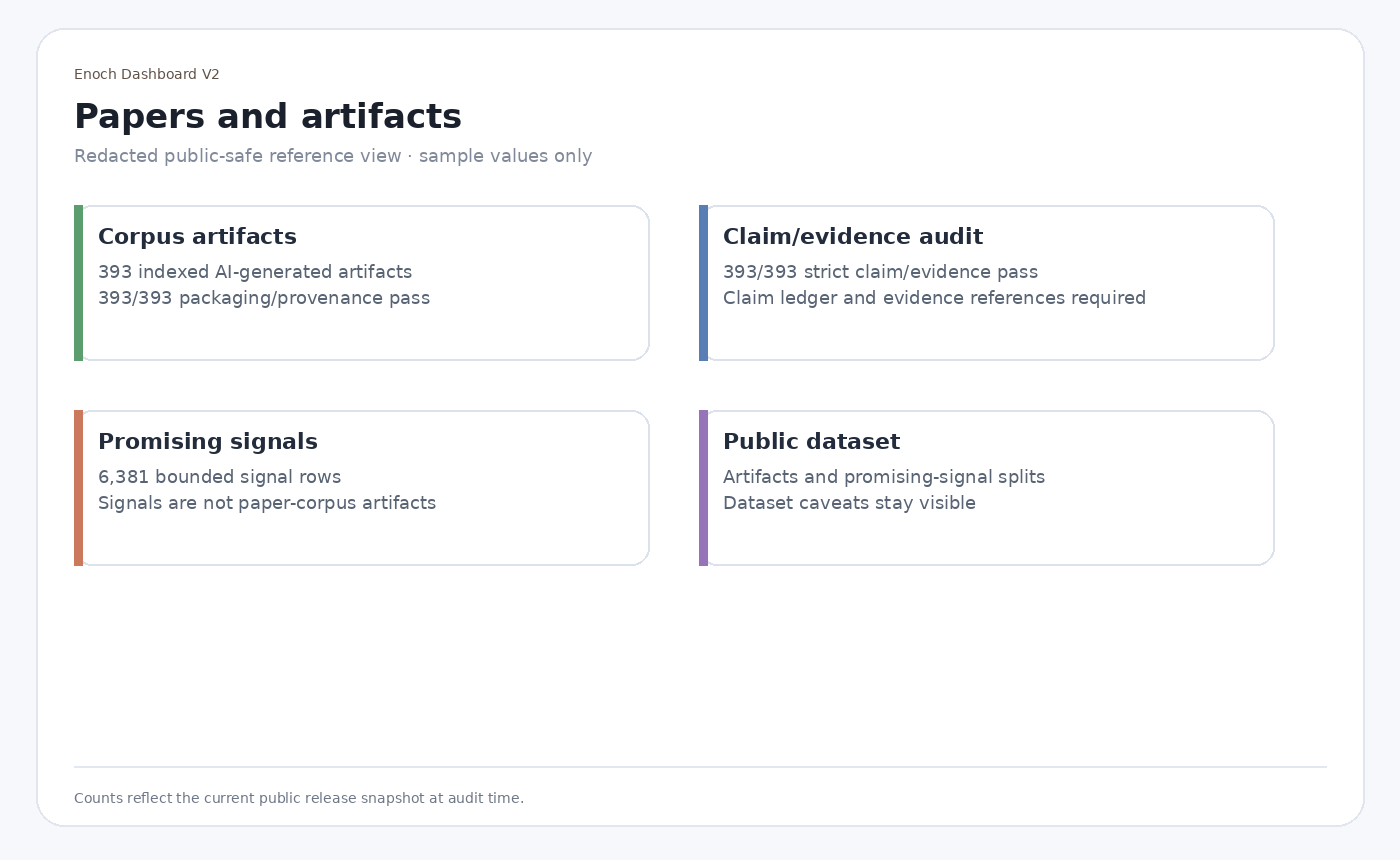
The dashboard should make provenance visible before a generated artifact is treated as ready. In the current capture below, every paper row keeps links to the draft, claim ledger, and manifest instead of presenting the draft as a standalone publication.The dashboard image below is a redacted, public-safe reference view with sample values. It shows the papers/artifacts layout without exposing private paths, internal IDs, or live operator data.
ai_generated: truehuman_authorship_claimed: false- generated/released provenance metadata
- evidence availability
- claim-ledger availability
- review status
- source fingerprints or equivalent traceability when available